If you’re getting into 4WD camping, one of the biggest mistakes people make is either overpacking or forgetting something critical. Australian conditions can change fast — from hot coastal humidity to cold mountain nights — and being prepared makes the difference between a smooth trip and a stressful one.
This guide breaks down the essential 4WD camping gear you actually need, especially for touring and remote travel in Australia. Whether you’re heading to the High Country, the beach, or the outback, this checklist will help you build a practical setup without wasting money.
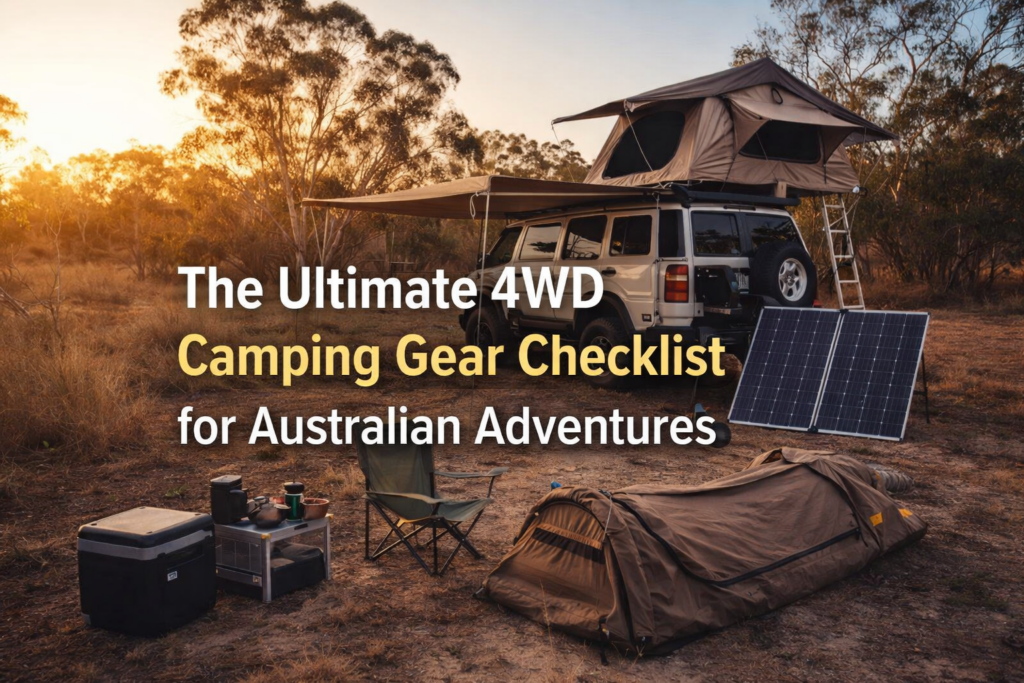
Vehicle Essentials: What Every 4WD Should Carry
Your vehicle is your lifeline. Before worrying about comfort items, make sure your recovery and vehicle basics are sorted.
Tyre Deflator and Air Compressor
Lowering tyre pressure is one of the simplest and most effective things you can do off-road. Sand, mud, and rocky tracks all benefit from reduced PSI. But once you’re back on bitumen, you’ll need to reinflate — which makes a reliable air compressor essential.
Recovery Tracks
Recovery boards (like Maxtrax-style tracks) are one of the safest self-recovery tools available. They’re lightweight, easy to use, and ideal for sand or mud situations where a snatch recovery isn’t possible.
Snatch Strap and Rated Shackles
If travelling with others, a snatch strap is essential. Always ensure your recovery points are rated — never use tow balls. Safety should never be compromised for convenience.
Long-Handle Shovel
Simple but powerful. Digging out tyres, clearing undercarriage sand, or creating drainage channels in wet camps can save hours of frustration.
Portable Jump Starter
Modern lithium jump starters are compact and far more convenient than traditional jumper leads. Especially useful when travelling solo.
Power and Refrigeration: Keeping Food Fresh and Batteries Alive
Power is where many beginner setups fall short. If you plan to camp more than one night, a proper 12V setup is worth the investment.
12V Fridge
Unlike eskies, a portable fridge maintains consistent temperature regardless of outside heat. In Australian summer conditions, this isn’t just convenience — it’s food safety. A 40–60L fridge suits most couples or small families.
Dual Battery or Portable Power Station
Running a fridge off your starter battery is asking for trouble. A dual battery system or quality lithium power station allows you to run fridges, lights, and charge devices without risking a flat start battery.
Solar Panels
Solar keeps you self-sufficient. For most setups running a fridge and basic lighting, 160W–200W of solar is ideal. Touring families or cloudy regions may benefit from 300W+.
Portable panels allow you to park in shade and place panels in sun — a big advantage in Australian bush camps.
Shelter and Sleeping: Comfort Without Overcomplication
The best sleeping setup is the one that matches how you travel.
Swag
Perfect for solo travellers or couples who move frequently. Quick setup, durable canvas, and minimal fuss. Many seasoned travellers still prefer swags for their simplicity.
Rooftop Tent
Popular with touring couples and families. Keeps you off the ground and packs away neatly. However, they’re more expensive and add roof weight.
Ground Tent
Most budget-friendly option and ideal for families needing space. Setup time is longer, but flexibility is greater.
The key is choosing what suits your travel style — not what looks best on social media.
Cooking and Food Prep: Practical Over Fancy
You don’t need a full outdoor kitchen, but you do need reliability.
Portable Gas Stove or BBQ
A simple two-burner gas stove covers most meals. For longer trips, a fold-out camp kitchen setup keeps everything organised and reduces stress.
Water Storage
At minimum, carry 20–40 litres of water for short trips. Remote travel requires significantly more. Collapsible water containers save space when empty.
Basic Cookware
Stick to essentials: frypan, saucepan, utensils, chopping board, sharp knife. Overpacking kitchen gear adds weight quickly.
Safety and Navigation: Often Overlooked
Comfort gear is optional. Safety gear isn’t.
First Aid Kit
A proper 4WD first aid kit should include compression bandages, snake bite kit, and trauma basics — not just bandaids.
UHF Radio
Still the most reliable communication tool in convoy travel and remote areas.
Offline Maps
Mobile reception can disappear quickly. Apps like Hema Maps or Gaia GPS allow offline downloads. Always download maps before leaving coverage.
Personal Locator Beacon (PLB)
For remote travel, a PLB can be life-saving in true emergencies.
How to Build Your Setup Over Time
One of the smartest approaches is building your kit gradually.
Start with:
- Recovery gear
- Basic sleeping setup
- Portable fridge
Then add:
4. Dual battery or power station
5. Solar
6. Organised storage solutions
You don’t need a $30,000 touring build to enjoy camping. Many experienced travellers still run simple, reliable setups.
Final Thoughts: Buy Smart, Not Just Expensive
The 4WD market is full of flashy gear, but not all of it is necessary. Focus on:
- Reliability
- Simplicity
- Safety
- Gear that suits your travel style
Australian conditions demand preparation, but they don’t require overcomplication.
Build your setup based on real needs — and upgrade as your experience grows